The Clubs That Grow Fastest Are Not Always the Ones With the Biggest Budgets – They Are the Ones That Make Fewer Mistakes.
Modern football is no longer decided only on the pitch. Recruitment, player development, performance management, organizational structure and strategic decision-making have become just as important as what happens on matchday.
As competition continues to increase at every level of the game, many clubs are looking beyond traditional structures in search of new advantages. One area attracting growing attention is strategic football consulting.
We spoke with football consultant, football intelligence specialist and SportynX Founder & CEO Ivan Ilecic, who has worked with more than 30 professional football organizations, federations and national team environments across Europe on projects related to player development, football technology, performance optimization, talent identification and strategic football operations, helping clubs make better decisions, improve performance and create long-term competitive advantages.
His experience includes work with organizations such as Borussia Dortmund, Tottenham Hotspur, Middlesbrough FC, Brentford FC, RCD Mallorca, FC Bayern Munich, GNK Dinamo Zagreb, NK Osijek, the Croatia National Team (A Team and Youth), The Football Association (England) Youth Player Development Programme, and many others.
In this interview, he explains why independent expertise is becoming increasingly valuable and how better decisions can directly influence both sporting and financial success in modern football.
Q&A Highlights
NSN: Why do football clubs need external consultants today?
Ivan Ilečić: One of the biggest misconceptions in football is that clubs need consultants only when something is wrong. In reality, the most ambitious clubs are often the ones most willing to seek external expertise.
This is not a new concept in professional football. Many of the world’s leading clubs already work with specialist consultants across different areas of their organisations, including strategy, recruitment, performance analysis, data intelligence, commercial development and organisational optimisation. Clubs such as Manchester City, Barcelona, Borussia Dortmund, Juventus, Paris Saint-Germain and many others understand that independent expertise can provide valuable perspectives, challenge internal assumptions and support better decision-making.
Modern football moves fast. Coaches focus on performance, sporting directors on recruitment, medical teams on player availability and executives on long-term planning. Everyone is focused on execution.
What often gets lost is the opportunity to step back and objectively evaluate how the entire organization is functioning.
That is where strategic consulting creates value. An external consultant brings an independent perspective, identifies inefficiencies, challenges assumptions and helps leadership see opportunities that are often difficult to recognize while managing day-to-day operations.
NSN: If clubs already employ coaches, sporting directors and analysts, what value can an external consultant add?
Ivan Ilečić: The real value of strategic football consulting is clarity — clarity driven by data, football expertise and a comprehensive assessment of the club’s sporting and operational ecosystem.
Football clubs generate enormous amounts of information every day, but information alone does not improve performance. The challenge is transforming that information into better decisions that improve sporting results, increase player value and strengthen long-term competitiveness.
Strategic consulting provides an independent evaluation of the club’s current position and helps leadership understand where the organization stands today, what is limiting its growth and where the greatest opportunities for improvement exist.
People inside football clubs are naturally invested in their work, their decisions and the people around them. That commitment is important, but it can sometimes make it difficult to evaluate situations with complete independence. An external consultant enters the environment without previous decisions to defend or internal relationships to protect, allowing the club to be assessed through evidence, measurable indicators and performance outcomes.
A professional football consulting engagement is not a one-week review or a presentation with recommendations. It is a structured process that begins with a comprehensive analysis of the club’s sporting and operational environment. This includes evaluating the first team, player development pathways, academy structure, recruitment processes, performance management systems, football operations and, where relevant, organizational and financial factors that influence long-term success.
The diagnostic phase alone can take several months because meaningful conclusions cannot be drawn from isolated meetings or short-term observations. Only after a clear understanding of the club’s current position has been established can leadership identify where the greatest opportunities exist and which decisions are most likely to create lasting impact.
The next phase is implementation. Recommendations only create value when they are translated into actions, measurable objectives and sustainable processes that can be monitored over time.
That is why meaningful consulting should be viewed as a long-term partnership rather than a short-term project. In football, significant improvement rarely happens in a matter of weeks. The strongest results are usually achieved through a structured process that unfolds over the course of an entire season.
NSN: What are the most expensive mistakes football clubs make?
Ivan Ilečić: Football is a game of decisions. Every transfer, contract, development plan or strategic choice carries a degree of risk. The challenge is not eliminating risk entirely, because that is impossible. The challenge is increasing the probability of making the right decision.
When clubs consistently improve the quality of their decisions, the impact becomes visible across the entire organization — from sporting performance and player value to financial sustainability and long-term competitiveness.
I often ask club presidents how many players they sign each year who fail to meet expectations. In many clubs, the answer is surprisingly high. That is why I believe the biggest expenses in football are not always the investments clubs make. They are the mistakes clubs fail to prevent.

NSN: Where does a strategic consulting engagement usually begin?
Ivan Ilečić: Before discussing recruitment, analytics or performance, I believe every club must answer one fundamental question: What does success actually look like?
One of the most common challenges I see is that clubs often focus on individual decisions without first establishing a clear strategic direction. Recruitment, player development, performance management and football operations should all support the same objective, yet that objective is not always clearly defined.
Success looks different for every organization. For some clubs, it may be avoiding relegation. For others, it may be qualifying for European competitions, increasing player value, developing academy talent or creating greater financial sustainability.
Once those objectives are clearly defined, the club can begin evaluating whether its current structure, processes and decisions are genuinely aligned with achieving them.
I often tell club leaders that football can never guarantee results. What it can do is significantly increase the probability of success. The organizations that consistently outperform expectations are usually the ones that make better decisions, align those decisions with clear objectives and remain disciplined in executing them over time.
NSN: Many club executives view consulting as an additional cost. Is football consulting really an expense or an investment?
Ivan Ilečić: I think every club eventually asks the same question: what is the return on investment?
My answer is simple. The real question is not how much consulting costs. The real question is how much it costs to operate without a clear understanding of where the club is losing money, wasting resources or missing opportunities.
This principle applies to every industry, not only football.
No business can improve if it does not understand where inefficiencies exist, where performance can be optimized and where future growth opportunities are being overlooked. Football clubs are no different.
Many clubs focus heavily on visible costs such as player salaries, transfer fees and operational budgets. What they often fail to analyze are the hidden costs created by poor processes, inefficient recruitment, underperforming assets and decisions that are not aligned with long-term objectives.
Without that level of analysis, progress becomes difficult and eventually a ceiling appears.
That is one of the reasons why many clubs remain in the same position for years. They continue operating in the same way while expecting different outcomes.
The clubs that adapt faster to modern thinking, embrace objective analysis and start making decisions based on evidence rather than assumptions will create advantages long before their competitors recognize the opportunity.
Football is becoming increasingly competitive every year. Those who identify problems earlier, improve faster and think further ahead will ultimately capture a larger share of the opportunities available in the game.
For that reason, I do not see consulting as an expense. I see it as an investment in understanding the business better and making better decisions in the future.
When discussing cost, I often put it into perspective.
In many professional clubs, the annual cost of strategic consulting is comparable to the cost of a single average first-team player.
Yet in almost every transfer window, clubs sign players who ultimately fail to deliver the impact that justified the investment. Whether it is recruitment, adaptation, performance or long-term fit, the reality is that not every transfer succeeds.
If a club is prepared to take that level of risk on a single player, why would it not invest a fraction of that risk into improving the quality of decisions that influence the entire organization?
A well-executed consulting project does not affect one player. It influences recruitment, performance, player development, squad planning and strategic decision-making across the club.
That is why the potential return is often significantly greater than the initial investment. The objective is not simply to reduce mistakes. The objective is to create better decisions that generate value across every area of the football operation.
NSN: Can you give us a practical example of how strategic football consulting can help a club?
Ivan Ilečić: Absolutely. One of the most practical examples is increasing the value of players that a club considers strategic assets or potential future transfer revenue.
Using our performance analysis tools, football intelligence systems and a team of specialists, we conduct a comprehensive assessment of the club’s players to identify those with the highest development potential.
Once those players are identified, we analyze them against the key performance indicators and profiling criteria that many top European clubs use during the early stages of their scouting and recruitment processes.
This is extremely important because if a player does not pass the initial scouting filters, he will often never reach the stage where clubs begin detailed live observation and long-term monitoring. In modern football, the scouting process can last a year or longer before a transfer decision is made.
Our role is to provide clubs with clear, data-driven reports and development pathways that help players improve the specific attributes, performance indicators and football characteristics that are most valued in the market. This process is always carried out in cooperation with the coaching staff to ensure that individual development objectives remain aligned with the team’s playing model, tactical principles and competitive goals.
As players make measurable progress through targeted development programs, their performances improve both on the pitch and within the analytical reports used throughout the football industry. This increases their visibility among potential buyers, strengthens their market position and creates additional value for the club.
At the same time, players benefit from greater confidence because their development is no longer based on assumptions or subjective opinions, but on clearly defined objectives and measurable performance indicators.
The value for the club extends beyond player development alone.
When club executives and presidents possess detailed reports, performance data and objective evidence demonstrating a player’s progression, their negotiating position becomes significantly stronger. In many cases, a player initially valued at €500,000 may justify a substantially higher valuation because the club can clearly demonstrate why that value exists and support it with evidence rather than opinion.
Ultimately, the objective is not simply to improve a player. The objective is to increase sporting performance, strengthen the club’s assets, improve transfer outcomes and create sustainable long-term value throughout the entire football operation.
NSN: Which areas of a football club should be reviewed if the goal is sustainable growth?
Ivan Ilečić: One of the biggest mistakes clubs make is treating departments as isolated units. Football does not work that way.
A recruitment decision influences performance. Performance influences player value. Player value influences financial sustainability. Financial sustainability influences future competitiveness.
Everything is connected. The clubs that achieve sustainable growth understand this relationship and build systems that align every department around common objectives.
Long-term success rarely comes from fixing one isolated problem. It comes from improving how the entire organization functions.
NSN: What separates clubs that consistently grow from those that remain stuck in the same cycle?
Ivan Ilečić: The answer is decision quality. The clubs that grow fastest are not always the clubs with the biggest budgets. They are the clubs that make fewer mistakes.
Every organization makes mistakes. The difference is how quickly they identify them, how honestly they evaluate them and how effectively they learn from them.
The strongest clubs create environments where assumptions can be challenged, difficult conversations are encouraged and decisions are based on evidence rather than emotion.
Football will always involve uncertainty. Nobody can eliminate that.
But clubs can dramatically improve their chances of success by improving the quality of the decisions they make every day.
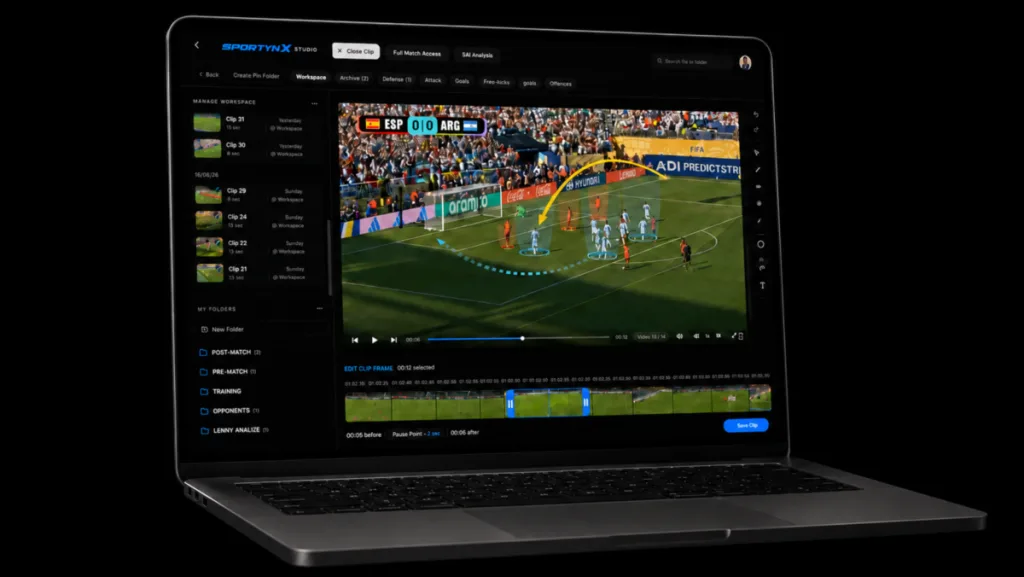
Many of these principles are also reflected in SportynX, a football intelligence platform designed to support clubs through player development, performance evaluation, recruitment intelligence and football operations.
Ultimately, the future belongs to clubs that combine expertise, objectivity and disciplined decision-making.
Those clubs may not always have the biggest budgets. But they will almost always have the biggest competitive advantage.